Timing Belt Replacement in Dunfermline & Fife
Is Your Engine Ticking, Chirping or Idling Roughly?
If you notice a rhythmic ticking noise coming from under the bonnet, a rough idle, or a slight hesitation when accelerating it could be a tell tale sign that your timing belt or tensioner pulley may be wearing out.
Your timing belt synchronises the precise movement between your engine’s valves and pistons thousands of times per minute. Over time, heat, oil exposure, and age cause the rubber to stretch or degrade.
Leaving or neglecting a worn timing belt doesn’t just affect your engine performance but it actively risks major internal engine damage.
- 20+ years experience
- Comprehensive health check included
- VW, Audi, Skoda, Kia, Hyundai Specialist
What Happens When You Ignore a Worn Timing Belt?
Engine Misfires & Poor Performance: A stretched belt slips on its gear teeth, throwing off the micro-timing between your pistons and valves, leading to lost power and rough idling.
Component Stress & Fluid Leaks: Failing belt tensioners or leaking water pumps place uneven strain on the belt, accelerating wear and risking sudden failure.
Unexpected Mechanical Failure: Unlike brake pads that squeal loudly when thin, a timing belt degrades internally, making preventative replacement at recommended intervals essential.

How We Solve It: Manufacturer Standard Belt Replacement
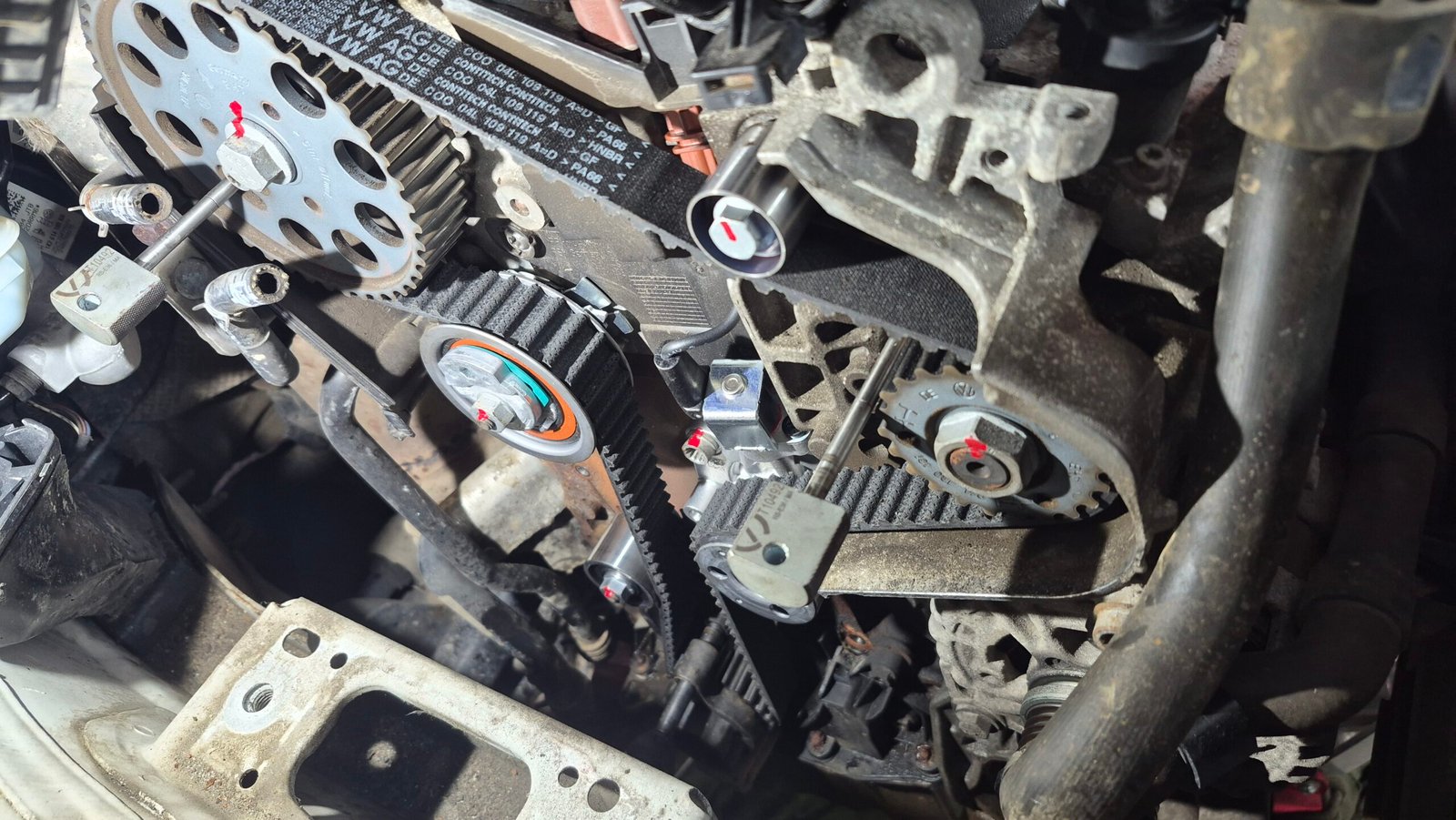
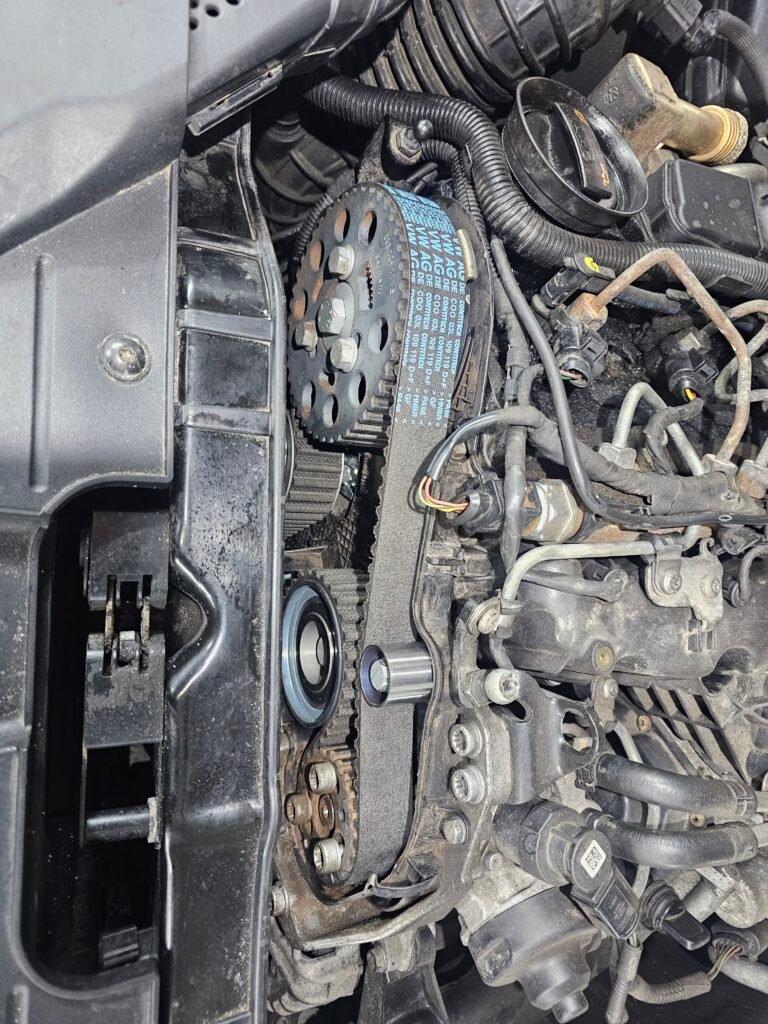
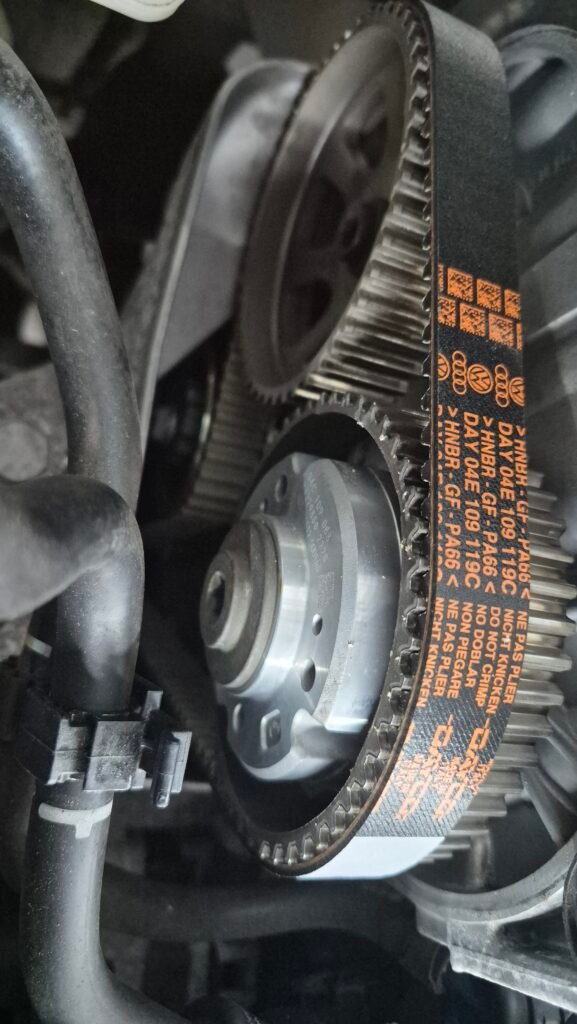
At DLC Automotive, we don’t rely on quick fixes or partial swaps. We replace the full timing belt kit and water pump using specialist camshaft locking tools to restore exact factory timing.
What Is the Difference Between a Timing Belt and an Auxiliary Belt?
Drivers often confuse these two engine belts, but they perform completely different functions:
Auxiliary (Serpentine) Belt: Sits on the outside of the engine and powers secondary systems like your alternator, air conditioning, and power steering pump.
Timing (Cam) Belt: Hidden behind a protective engine cover, it directly controls the internal synchronization of your engine’s valves and pistons.
Our Step-by-Step Replacement Process
Thorough Inspection & Teardown: We remove the protective timing covers and inspect the surrounding area for oil or coolant leaks that could degrade a new belt.
Specialist Engine Locking: Carl fits vehicle-specific locking tools to secure the camshafts and crankshaft in their exact factory positions before removing the old belt.
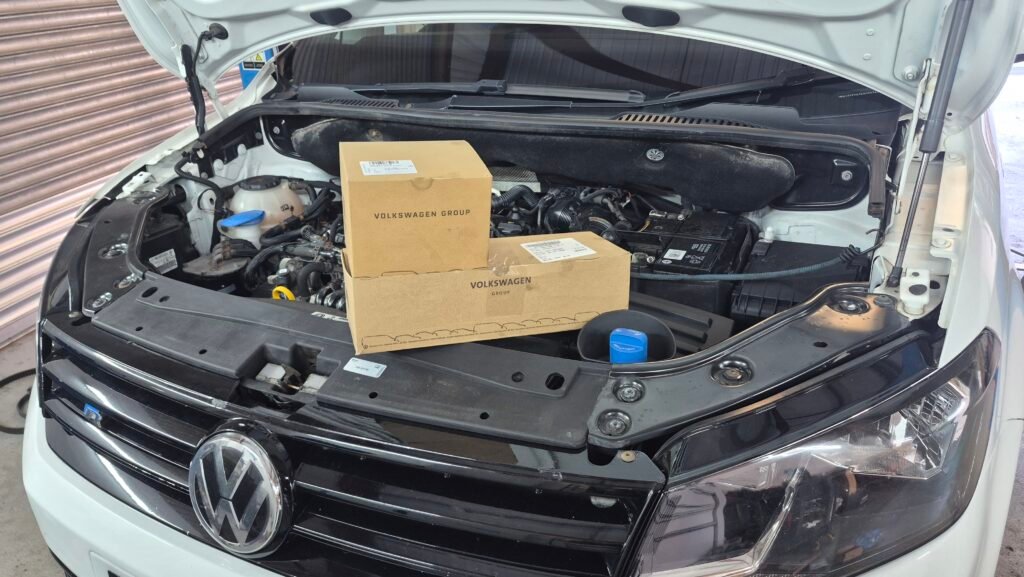
Full Kit & Water Pump Installation: We fit a complete kit, including a new timing belt, tensioner pulleys, idlers and a fresh water pump. (which is highly recommended)
Final Timing Verification & Coolant Refresh: We manually rotate the engine to verify zero timing variance, refill the system with fresh coolant, and torque all fastenings to manufacturer specs.
Why Choose Us To Replace Your Timing Belt & Water Pump?
Master Tech Oversight: Led by Carl, a fully qualified Master Technician, every timing belt replacement is carried out with dealer-level precision and specialist alignment tools.
Transparent Pricing: Clear, upfront fixed quotes covering the full belt kit, water pump, fresh coolant, labour, and VAT with zero hidden add-ons.
Comprehensive Health Inspection: While your car is in the workshop, we perform a complimentary visual check of your auxiliary belts, engine mounts, and fluid levels to keep you safe.
Direct Communication: Speak directly with the technician carrying out the work.
FAQs About Timing Belt Replacement
How often should I get my timing belt replaced?
We recommend following your vehicle manufacturer’s guidelines, which typically range between 40,000 to 100,000 miles or every 4 to 5 years (whichever comes first), as rubber degrades over time regardless of mileage.
Why do you replace the water pump at the same time?
In most engines, the timing belt directly drives the water pump. Because accessing the water pump requires removing the timing belt assembly, replacing a low-cost water pump at the same time saves you paying massive duplicate labour costs if it fails later.
How long does a timing belt replacement take?
A timing belt and water pump replacement typically takes between 3 to 5 hours depending on your engine layout, ensuring a thorough, tested repair.
Ready for Worry Free Driving?
1. Message us on Whatsapp
With your reg and mileage. Include a photo and description or video of the problem.
2. Book your car in
At a time that is convenient to you.
3. Drop the car off
We will diagnose the issue, call you to confirm the fault and costs. Then get you back on the road.